
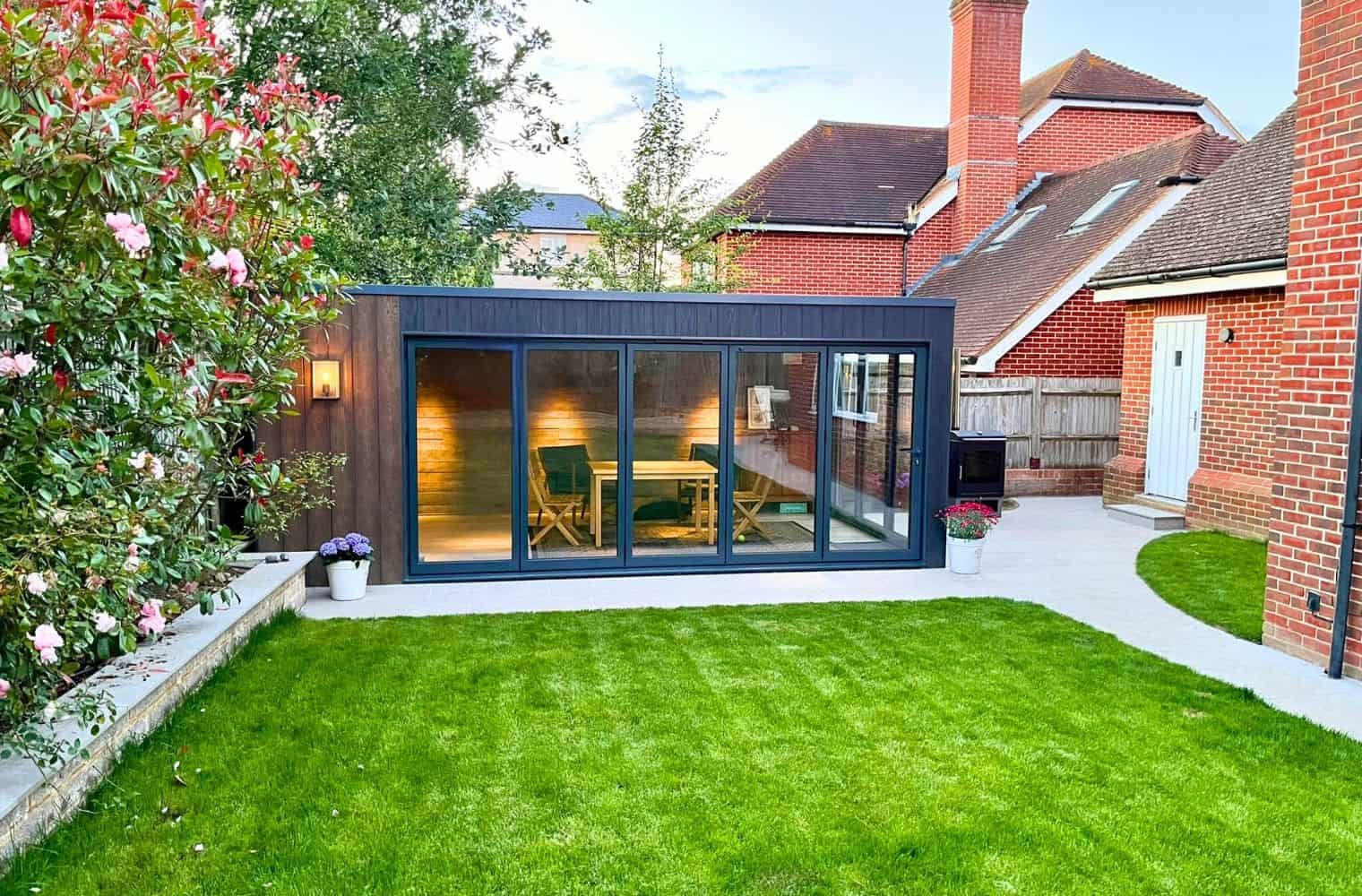
Garden Room
Changes will free up planners and will give homeowners greater freedom to adapt their homes to changing needs.
This reform is based on the Government’s Programme for Government commitment to lift the regulatory burden on homeowners and their families while also enabling planning authorities to focus their resources on more complex projects that merit greater examination.
Exempted development regulations had not been substantially updated in almost 25 years and these new regulations form part of the implementation of the Planning and Development Act 2024, itself a significant revision of our planning system.
The changes within the new regulations are motivated by the practical need for homeowners to maximise the efficient use of residential space through enhancements, expansion or adaptation if they wish to do so with their homes.
The proposed changes follow input from a comprehensive public consultation process undertaken in 2025 which received almost 1,000 submissions.
Minister for Housing, Local Government and Heritage, James Browne TD, emphasised:
“As Minister for Housing, I have been laser focused on cutting red tape, reducing bureaucracy and streamlining systems to get Ireland building better and faster.
“Engaging with our planning system has been a bug bearer for so many people, costing time and money for things that shouldn’t be on the desk of planners in reality.
“Sensible and considered planning guidance is absolutely necessary for communities as our villages, towns and cities grow and expand - but not for things like bike storage and velux windows by and large.
“I want to free up our planning expertise for more complex priorities, and in particular, getting on with the delivery of quality homes where people need them.
“Working closely with Minister of State John Cummins, we have identified some of the choke holds on our local planning authorities and these regulations will ease some of the pressure.
“When it comes to modular dwelling units in back gardens and indeed the subdivision of homes - these will serve as a a practical option now for many people with differing needs. It is an option for people if it suits their situation and space without the rigmarole of going through extensive planning.”
Minister of State for Planning and Local Government, John Cummins TD, who signed the Regulations said:
“As Minister of State for Planning, my priority has always been to remove things from the planning system that don’t need to be there and simply get in the way of progress. These residential exemptions will give people autonomy over making small changes to their homes without needing planning permission.
“Giving people the opportunity to put a detached dwelling in their back garden albeit with limitations, will provide housing options for people and I know following the positive feedback that many people will welcome the news that the exemptions take effect from today.
“These reforms are about empowering people in terms of their own garden space or space within their own home and allowing families to make decisions in relation to their own living space.
“This is the second set of Exempted Development regulations I have brought forward in recent months with Agriculture and Residential now complete. The next batch will be Infrastructure Exemptions.”
Additional Dwellings
The changes coming into effect today include a new exemption for an auxiliary habitable dwelling which will allow for the addition of a detached habitable accommodation linked to the services of the principal house – between 32sqm and 45sqm in area.
The tax arrangement for such auxiliary dwellings and how it interacts with the “Rent-a-Room” tax relief will be clarified during this year’s Budgetary process, with any necessary amendments needed introduced in the Finance Bill.
Other Exemptions
Other proposed changes include:
A new exemption for sub-division of the principal dwelling which will allow for the creation of up to 1 additional self-contained unit within the existing building envelope, with a minimum floor area for each subdivided unit of 32 square metres.
A new exemption will provide for extension via the addition of a dormer roof box and/or roof light on the principal dwelling.
The existing exemption for extension of the principal dwelling will be increased from 40 square metres to 45 square metres.
The existing exemption for a structure in the back garden (such as a shed, store, home office or gym) will be increased from 25 square metres to 30 square metres.
A new exemption will allow for the provision of insulation on external walls of a dwelling, in line with existing SEAI grant provision.
The exemption for a heat pump will be expanded so that it is not restricted to the rear of the property.
A new exemption will provide for cycle or bin storage at both the front and back of the property, with enough space to hold either 3-4 adult size bicycles, 2 cargo bikes or 3 wheelie bins.
In all cases, all relevant Building, Building Control and Fire Regulations, including those for habitable dwellings where applicable, will apply.